martes, 16 de febrero de 2016

El Carnaval de 5º de Primaria en el colegio


Como todos los años, celebramos la fiesta del Carnaval en el colegio. El día 5 de febrero fue celebrado este año 2016.

El tema del Carnaval de este año giró en torno a la figura de Yehudi Menuhin, el creador del Programa MUS-E hace 20 años. Este fue el punto de partida de una serie de actos que todos los colegios participantes en este programa que llevaremos a a cabo a lo largo de este año en el que se conmemora el CENTENARIO DE SU NACIMIENTO, el día 22 de abril.


Los disfraces estuvieron relacionados con figuras relevantes del siglo XX que han destacado en diferentes disciplinas científicas y artísticas (música, danza, pintura, etc.)

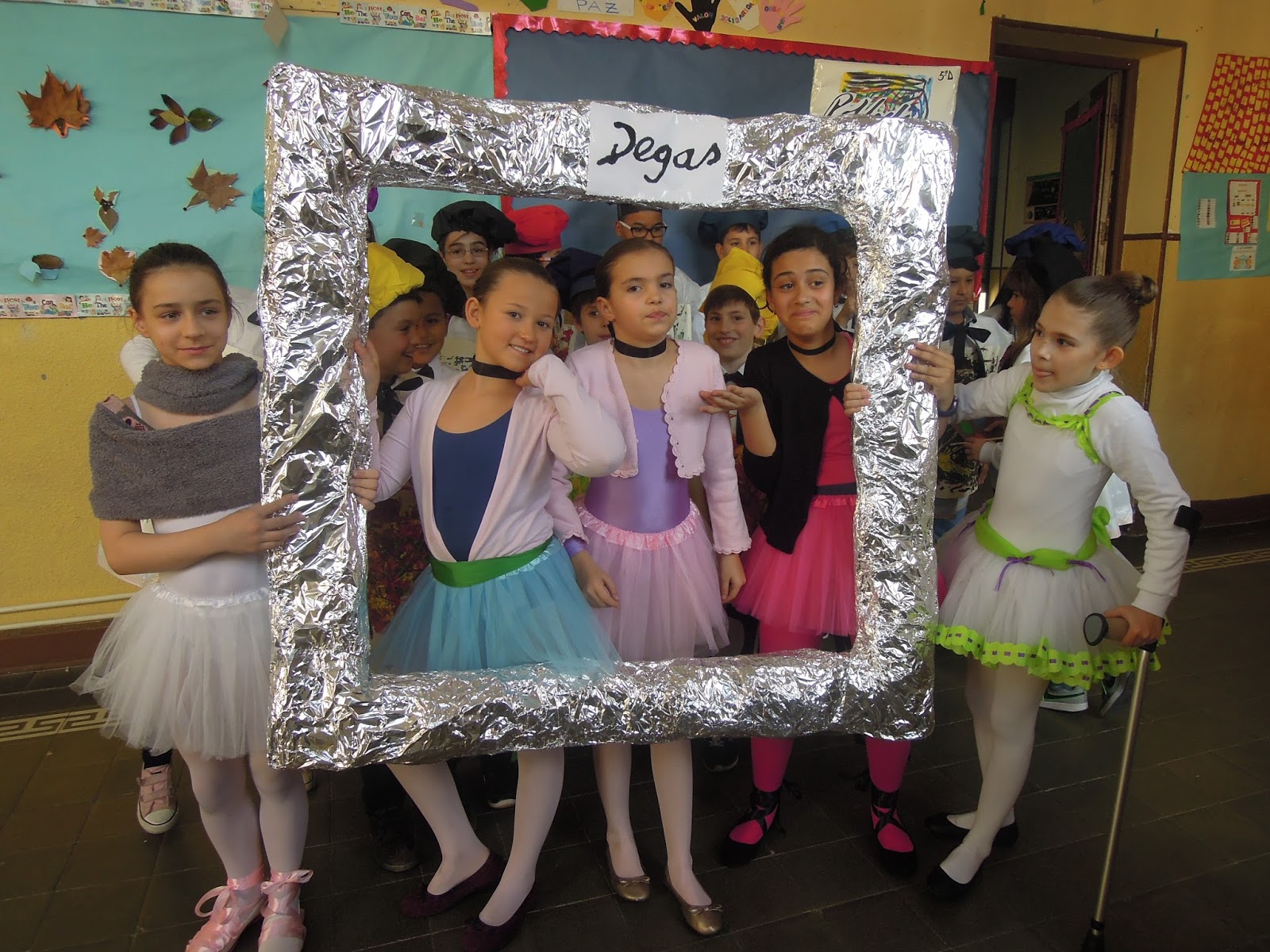
Los grupos de 5º de Primaria se disfrazaron inspirados en distintos pintores del siglo XX:


5º A - Picasso


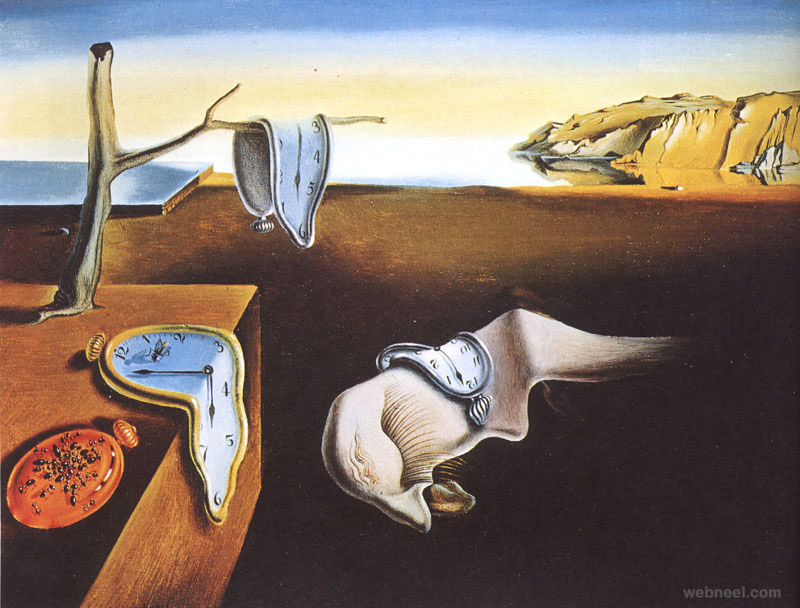
5º B - Dalí


5º C - Miró


5º D - Degas y Pollock


El Carnaval de los animales - Saint-Saëns - 


El carnaval 2016

¿Cuál es el origen y el motivo de la celebración del Carnaval?


El carnaval es, muy posiblemente, la fiesta pagana que más personas celebran y disfrutan en todo el planeta. Son días de baile, disfraces y mucha diversión.
El hecho de disfrazarse, pintarse la cara y festejarlo es un acto que se remonta a la antigüedad y existen algunas evidencias de que el pueblo sumerio ya realizaba este tipo de  festejos hace 5.000 años.

Tal y como lo conocemos hoy en día, el carnaval es una continuidad de los antiguos Saturnales, las festividades romanas que se celebraban en honor al Dios Saturno.
A raíz de la expansión del cristianismo fue cuando más auge tomó y la fiesta adquirió el nombre de carnaval, teniendo como motivo principal el hecho de despedirse de comer carne y de llevar una vida licenciosa durante el tiempo de cuaresma.
Eran tres días de celebración a lo grande, en lo que casi todo estaba permitido; de ahí uno de los motivos de ir disfrazado, taparse el rostro y salvaguardar el anonimato. Hoy en día, esta celebración se ha alargado una semana, comenzando en la mayoría de lugares el Jueves Lardero.

Esa despedida a la carne se realizaba los días previos al Miércoles de ceniza, fecha en la que se daba comienzo a la cuaresma; un periodo de cuarenta días (hasta el Domingo de resurrección) que se destinaba a la abstinencia, recogimiento y el ayuno, acompañado de oraciones, penitencia y espiritualidad religiosa.


Llegada y pregón del Carnaval


He venido a pregonar
que me apetece bailar.

Pero no bailaré a gusto
sin haber dicho lo justo.

Niños y grandes, oíd
las leyes de este adalid,

que proclamo, aquí y ahora,
con voz alta y transgresora.

Desde hoy y sin guardián
las mujeres mandarán.

Licor mamará la fuente 
y lloverá pan crujiente.  

Calor y frío invernal 
irán raudos al penal.

Los días de la semana,
seis de fiesta, uno galbana.

Estas leyes son vigentes
para mi y mis descendientes

¡Viva la ley! ¡Viva la gresca!
¡Que empiece la fiesta!


jueves, 4 de febrero de 2016

CARNIVAL

 It´s time to get ready for Carnival! Class 5B are going to be dressing as the artist Salvador Dali, who was famous for his surrealist paintings, and for his funny moustache!


Tomorrow, everyone must come to school dressed like an artist! Here is a video that will show you how to make a special hat that will make you look just like a famous painter.


See you tomorrow for Carnival!

lunes, 25 de enero de 2016

Robert Burns Day

Robert Burns was a Scottish poet during the 18th century and is known as Scotland's national poet. 

Every year on his birthday, the 25th January, people celebrate his life by holding a Burns Supper. At this supper we eat haggis, neeps and tatties (neeps is a Scottish word for turnip, and tatties is a Scottish word for potatoes).


Before eating the meal, the guests join together to say a special grace:

Some hae meat an
canna eat,
And some was eat that want it;
But we hae meat, and we can eat,
And sae let the Lord be thankit.

Translation:

Some have meat and cannot eat,
Some cannot eat that want it;
But we have meat, and we can eat,
And so let the Lord be thanked.

After the meal the guests often take part in a ceilidh.

Burns is best known for writting poetry in the Scots language. My favourite of his poems is called 'To a Mouse'. According to legend, Burns was ploughing in the fields and accidentally destroyed a mouse's nest, which it needed to survive the winter. In fact, Burns's brother claimed that the poet composed the poem while still holding his plough.


Happy Burns Day!


jueves, 21 de enero de 2016

Ecosystems


In science, we have been learning all about ECOSYSTEMS! An ecosystem is a community of animals, plants and microorganisms, and the habitat that they live in. An ecosystem can cover a small area, like a pond, or it can cover a very large area, like a tropical rainforest.


In each of these ecosystems, living things and non living things exist. Non living things include things such as rocks, water and the temperature. There are many living things in each ecosystem, from the grass on the ground to the monkey in the tree and the spider in its web. 

In order for these living things to continue to live, they must eat! Some living things produce their own food, such as flowers, so they are known as PRODUCERS. Other living things, like tigers, cannot produce their own food, so the must eat other living things, so they are known as CONSUMERS. Follow the link to play the producers and consumers game!
http://www.sheppardsoftware.com/content/animals/kidscorner/games/producersconsumersgame.htm

Here is a short video explaining the FOOD CHAIN:


Ecosystems also exist under water. Coral reefs are under water ecosystems that are built by colonies of tiny animals found in marine waters. The largest coral reef that exists is The Great Barrier Reef in Australia. Watch the video and explore the coral reef!


miércoles, 13 de enero de 2016

Hello everyone!

First of all, I would like to say a big thank you for welcoming me to your lovely school. I hope that you enjoyed my presentation last week and that you liked learning about my life in Glasgow, Scotland. Do you remember the song that we listened to? I have uploaded the video for you to listen to at home, and I have added the lyrics so that you can learn the words and sing-a-long!

See you in class!

Lisa


When I wake up, well, I know I´m gonna be
I´m gonne be the man who wakes up next to you
When I go out, yeah I know I´m gonna be
I'm gonna be the man who goes along with you
If I get drunk, well, I know I'm gonna be
I'm gonna be the man who gets drunk next to you
And if I haver, hey, I know I'm gonna be
I'm gonna be the man who's havering to you

But I would walk five hundred miles
And I would walk five hundred more
Just to be the man who walked a thousand miles
To fall down at your door

When I'm working, yes, I know I'm gonna be
I'm gonna be the man who's working hard for you
And when the money comes in for the work I do
I'll pass almost every penny on to you
When I come home (When I come home), oh, I know I'm gonna be
I'm gonna be the man who comes back home to you
And if I grow old, well, I know I'm gonna be
I'm gonna be the man who's growing old with you

But I would walk five hundred miles
And I would walk five hundred more
Just to be the man who walked a thousand miles
To fall down at your door

Da lat da (Da lat da), da lat da (Da lat da)
Da-da-da dun-diddle un-diddle un-diddle uh da-da
Da lat da (Da lat da), da lat da (Da lat da)
Da-da-da dun-diddle un-diddle un-diddle uh da-da

When I'm lonely, well, I know I'm gonna be
I'm gonna be the man who's lonely without you
And when I'm dreaming, well, I know I'm gonna dream
I'm gonna dream about the time when I'm with you
When I go out (When I go out), well, I know I'm gonna be
I'm gonna be the man who goes along with you
And when I come home (When I come home), yes, I know I'm gonna be
I'm gonna be the man who comes back home with you
I'm gonna be the man who's coming home with you

But I would walk five hundred miles
And I would walk five hundred more
Just to be the man who walked a thousand miles
To fall down at your door

Da lat da (Da lat da), da lat da (Da lat da)
Da-da-da dun-diddle un-diddle un-diddle uh da-da
Da lat da (Da lat da), da lat da (Da lat da)
Da-da-da dun-diddle un-diddle un-diddle uh da-da
Da lat da (Da lat da), da lat da (Da lat da)
Da-da-da dun-diddle un-diddle un-diddle uh da-da
Da lat da (Da lat da), da lat da (Da lat da)
Da-da-da dun-diddle un-diddle un-diddle uh da-da

And I would walk five hundred miles
And I would walk five hundred more
Just to be the man who walked a thousand miles
To fall down at your door